
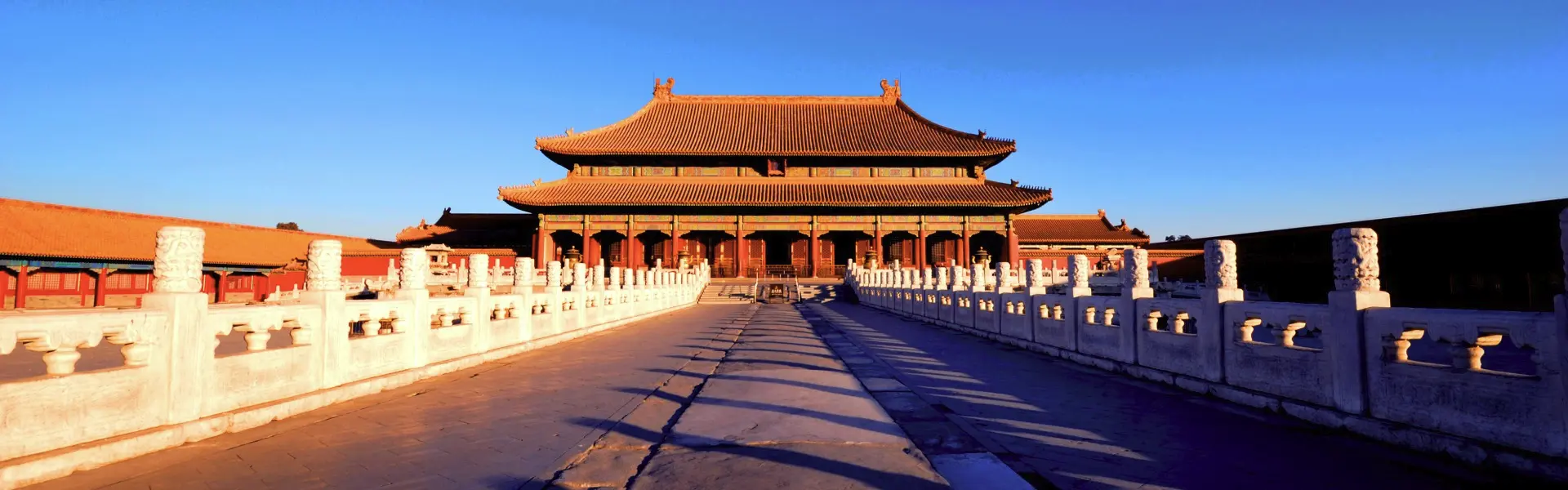
Why Is Tiananmen Called the "Gate of Heavenly Peace"?

Tiananmen Sunrise Panorama
Quick Answer
Tiananmen (天安门) literally means "Gate of Heavenly Peace" and embodies ancient Chinese political philosophy:
- "Tian" (天 - Heaven) represents the Mandate of Heaven, emphasizing imperial authority's divine origin
- "An" (安 - Peace) symbolizes the aspiration for national stability and people's well-being
- "Men" (门 - Gate) marks this as the ceremonial entrance to the Imperial City
The name was changed from "Chengtianmen" (承天门) to "Tiananmen" in 1651 during the Qing Dynasty, reflecting the political philosophy of "receiving mandate from Heaven to govern and bring peace to the nation" (受命于天,安邦治国).
Table of Contents
| Section | Key Points | Reading Time |
|---|---|---|
| Name Evolution | From Chengtianmen to Tiananmen (1417-1651) | 4 minutes |
| Cultural Significance | Mandate of Heaven & governance philosophy | 5 minutes |
| Architectural Symbolism | Design reflecting cosmic order | 4 minutes |
| Historical Transformations | 600 years of change and renewal | 5 minutes |
| Modern Significance | From imperial gate to national symbol | 3 minutes |
| Visitor Guide | Practical visiting information | 3 minutes |
Total reading time: 24 minutes | Deep exploration of Chinese political philosophy
Name Evolution
Ming Dynasty Origins: The Birth of Chengtianmen (1417)
Emperor Yongle's Grand Vision
Ming Dynasty Chengtianmen
In 1417 (15th year of Ming Yongle), Emperor Zhu Di established Beijing as the new capital and constructed "Chengtianmen" (承天门 - "Gate of Receiving Heaven's Mandate") as the main entrance to the Imperial City.
Original Name Meaning:
| Character | Meaning | Political Significance |
|---|---|---|
| 承 (Cheng) | To receive, to inherit | Receiving Heaven's command |
| 天 (Tian) | Heaven | Divine authority |
| 门 (Men) | Gate | Entrance to sacred space |
Historical Records:
📜 Ming Veritable Records "In the 15th year of Yongle, Beijing palace construction began, establishing Chengtianmen as the main gate of the Imperial City."
Reconstruction Through Fire
1457 - Lightning struck and destroyed Chengtianmen
1465 - Rebuilt during Chenghua reign, establishing the basic form of today's structure
Qing Dynasty Transformation: Renaming to Tiananmen (1651)
The Historic Moment
In 1651 (8th year of Qing Shunzhi), the Manchu rulers renamed the gate from "Chengtianmen" to "Tiananmen" (天安门).
Why the Change?
- Political Legitimacy
- Maintained the "Mandate of Heaven" concept (天)
- Added emphasis on "Peace" and governance (安)
- Showed cultural respect while asserting new authority
- Philosophical Innovation
- "Chengtian" (承天) = passively receiving Heaven's mandate
- "Tian'an" (天安) = actively governing under Heaven to bring peace
- Shift from legitimacy to responsibility
- Cultural Integration
- Manchu rulers integrating into Chinese political tradition
- Building bridges between conquest and governance
- Demonstrating concern for people's welfare
New Name Interpretation:
天安门 (Tiananmen)
    ↓
受命于天 (Receiving mandate from Heaven)
    +
安邦治国 (Governing to bring peace to the nation)
    =
Gate of Heavenly Peace
✨ Cultural Wisdom The renaming reflected the Qing Dynasty's transition from military conquest to civil governance, emphasizing not just power but responsibility.
Cultural Significance
"Tian" (天 - Heaven): The Mandate of Heaven
Political Philosophy Foundation
Harmony Between Heaven and Humanity
In ancient Chinese thought, "Heaven" represented:
| Concept | Meaning | Application |
|---|---|---|
| Supreme Authority | Ultimate source of power | Imperial legitimacy |
| Moral Standards | Highest ethical principles | Ruler's virtue requirement |
| Cosmic Order | Fundamental laws of nature | Political stability |
| Divine Will | Heaven's intentions | Dynasty's rise and fall |
The Mandate of Heaven Theory:
- Heaven grants authority to virtuous rulers
- Rulers must govern justly and benevolently
- Natural disasters signal Heaven's displeasure
- Dynasties fall when they lose Heaven's favor
Astronomical Connection:
Ancient Chinese astronomy identified Ziwei Yuan (Purple Forbidden Enclosure) as the celestial emperor's residence centered on the North Star. Earthly palaces mirrored this cosmic geography.
💫 Heaven-Earth Correspondence "Heaven has the Purple Palace, where the Supreme God resides. Earthly palaces mirror heavenly patterns."
"An" (安 - Peace): Governance Philosophy
Multi-Layered Meaning of "Peace":
1. National Security (国安)
- Freedom from warfare and invasion
- Strong defense and diplomatic stability
- Territorial integrity
2. Social Stability (社会安定)
- Good public order
- Effective law enforcement
- Harmonious communities
3. People's Well-being (民安)
- Adequate food and shelter
- Economic prosperity
- Happy family life
4. Spiritual Tranquility (心安)
- Cultural flourishing
- Moral education
- Peace of mind
Governance Ideal:
天命 (Heaven's Mandate)
    ↓
明君 (Enlightened Ruler)
    ↓
善政 (Good Governance)
    ↓
国泰民安 (Prosperous Nation, Peaceful People)
Historical Context:
The emphasis on "An" (Peace) in 1651 was particularly significant:
- Qing Dynasty had just conquered China (1644)
- Country recovering from Ming-Qing transition wars
- Need to reassure Han Chinese population
- Demonstrate benevolent governance intentions
🕊️ Governance Promise The name "Tiananmen" served as a public declaration: "We rule by Heaven's mandate to bring you peace and prosperity."
Architectural Symbolism
Design Reflecting Cosmic Order
Structural Hierarchy
Tiananmen Architectural Structure
Five-Pavilion Design:
| Level | Pavilions | Symbolism |
|---|---|---|
| Central | 1 main pavilion | Emperor (center of cosmos) |
| Flanking | 2 pairs (4 total) | Four directions, four seasons |
| Total | 5 pavilions | Five elements, five virtues |
Dimensions and Numerology:
- Height: 33.7 meters (representing celestial realm)
- Width: 66 meters (double fortune number)
- Roof Tiles: Golden yellow (imperial color, earth element)
- Wall Color: Vermillion red (sun, vitality, celebration)
Spatial Positioning
Central Axis Alignment:
North: Jingshan Hill (backing mountain)
    ↓
Forbidden City (Imperial Palace)
    ↓
Tiananmen (Ceremonial Gate)
    ↓
Outer City
    ↓
South: Temple of Heaven
This north-south axis represents:
- Political Order: Emperor facing south to rule
- Cosmic Order: North Star as center of universe
- Moral Order: Cultivation (north) to civilization (south)
Feng Shui Principles:
- Mountains behind (靠山): Jingshan Hill provides protection
- Water in front (面水): Original moat systems
- Left Azure Dragon: Eastern palace complexes
- Right White Tiger: Western palace complexes
Decorative Elements
Golden Water Bridges (金水桥)
Five marble bridges spanning the moat:
- Central bridge: Emperor only
- Two flanking bridges: Imperial family and high officials
- Outer bridges: Civil and military officials
Stone Lions
Pair of massive guardian lions:
- Male lion (west): Paw on globe (imperial power over world)
- Female lion (east): Paw on cub (dynastic continuity)
Dragon and Phoenix Motifs
- Dragons: 13,844 dragon images on Tiananmen complex
- Phoenix: Empress symbolism in paired decorations
- Harmony: Representing balanced governance
Historical Transformations
Ming Dynasty (1417-1644)
Construction Era:
1417 - Chengtianmen built as part of Beijing capital construction
1457 - Destroyed by lightning fire
1465 - Rebuilt and enlarged
Function:
- Main ceremonial entrance to Imperial City
- Location for imperial edicts proclamation
- Symbol of Ming imperial authority
Significant Events:
| Year | Event | Importance |
|---|---|---|
| 1449 | Emperor Zhengtong's departure for Tumu Crisis | Military significance |
| 1521 | Grand Rites Controversy debates | Ritual importance |
| 1644 | Li Zicheng rebels entered Beijing | Dynasty's end |
Qing Dynasty (1644-1912)
Early Qing Transformation:
1651 - Renamed to Tiananmen
1688 - Damaged by earthquake, repaired
1860 - Brief occupation during Second Opium War
Golden Age Functions:
- Imperial Proclamations
- New emperor's accession edicts
- Important policy announcements
- Military victories declarations
- Ceremonial Center
- Departures for Temple of Heaven rituals
- Returns from military campaigns
- Grand processionals
- Political Symbol
- Represented Qing legitimacy
- Showed cultural continuity
- Demonstrated multi-ethnic unity
Late Qing Challenges:
1900 - Damaged during Boxer Rebellion and Eight-Nation Alliance invasion
1911 - Xinhai Revolution ended Qing Dynasty
Republic of China (1912-1949)
Transitional Period:
1912 - End of imperial era, but Tiananmen retained significance
1919 - May Fourth Movement gathered at Tiananmen Square
1949 - People's Republic of China proclaimed here
Architectural Changes:
- Moats filled in to create open square
- Removed imperial usage restrictions
- Opened to public access
- Became site of national events
People's Republic Era (1949-Present)
Modern Transformation:
October 1, 1949 - Chairman Mao proclaimed the People's Republic
Major Renovations:
| Year | Work | Purpose |
|---|---|---|
| 1952 | Structural reinforcement | Preserve historic building |
| 1970 | Major restoration | Repair Cultural Revolution damage |
| 2006 | Comprehensive renovation | Modern preservation standards |
Current Function:
- National symbol of China
- Tourist landmark (millions visit annually)
- Site of national ceremonies
- Featured on emblem of People's Republic
🏛️ Continuity Through Change Despite 600 years of dynastic change and social transformation, Tiananmen has remained a constant symbol, adapting its meaning while preserving its cultural essence.
Modern Significance
From Imperial Gate to National Symbol
Symbolic Evolution:
Imperial Era:
- Gate separating sacred imperial space from common realm
- Symbol of Heaven's authority on earth
- Exclusive ceremonial venue
Modern Era:
- Open public space
- Symbol of national unity and sovereignty
- Meeting point for celebrations and commemorations
Cultural Heritage:
- UNESCO Recognition: Part of Forbidden City World Heritage Site
- National Emblem: Featured on PRC coat of arms
- Currency: Appears on Chinese renminbi notes
Contemporary Relevance
Political Symbolism:
Ancient: 受命于天,安邦治国
(Receiving Heaven's Mandate to Govern and Bring Peace)
    ↓
Modern: Preserving Cultural Heritage
While Building Modern Nation
Tourist Destination:
- Annual Visitors: Over 100 million to Tiananmen Square area
- Photography Icon: One of world's most photographed structures
- Cultural Bridge: Connecting past and present
Architectural Influence:
The "Five-Pavilion Gate" design influenced:
- Traditional Chinese architecture worldwide
- Government buildings in modern China
- Cultural centers and museums
Visitor Guide
Visiting Tiananmen Gate Tower
Access Information:
Location: Northern end of Tiananmen Square, Beijing
Nearest Metro: Tiananmen East or Tiananmen West (Line 1)
Admission:
| Category | Price | Notes |
|---|---|---|
| Adult | ¥15 | Standard admission |
| Student | ¥5 | Valid student ID required |
| Senior (60+) | Free | ID verification needed |
Opening Hours:
- May-October: 8:30 AM - 5:00 PM (last entry 4:30 PM)
- November-April: 9:00 AM - 4:30 PM (last entry 4:00 PM)
- Closed: Mondays (except national holidays)
What to See
1. Climb the Gate Tower (15-20 minutes)
Experience the view emperors once enjoyed:
- Panoramic view of Tiananmen Square
- Forbidden City entrance perspective
- Chang'an Avenue vista
2. Portrait of Mao Zedong
The iconic portrait hanging on the gate:
- Repainted annually before National Day
- 6 meters tall × 4.6 meters wide
- Weighs approximately 1.5 tons
3. Golden Water Bridges
Five marble bridges with ornate carvings:
- Best photo opportunity from gate tower
- Traditional feng shui water feature
- Symbolic of five Confucian virtues
4. Stone Lions
Massive guardian lions flanking the entrance:
- Over 600 years old
- Each weighs several tons
- Male (west) and female (east) pair
Visiting Tips
Best Times:
✅ Weekday mornings (9:00-10:30 AM): Fewer crowds, soft lighting
✅ Late afternoon (4:00-5:00 PM): Golden hour photography
❌ Avoid: National holidays (Oct 1-7), weekends, noon-2 PM (harsh sun)
Photography:
📸 Best Shots:
- Front view from Tiananmen Square
- Side angle from Chang'an Avenue
- Sunset with golden roof tiles
- Night illumination
What to Bring:
- ✅ Valid photo ID (required for entry)
- ✅ Camera (photography allowed on tower)
- ✅ Comfortable walking shoes
- ✅ Water bottle
- ❌ Large bags (storage available but limited)
Security:
- Airport-style security screening required
- Expect 10-30 minute queue during peak times
- No food or drinks allowed on tower
- Respectful behavior and dress required
Combined Itinerary Suggestions
Half-Day Cultural Tour (4-5 hours):
8:30 AM - Arrive at Tiananmen Square
    ↓
9:00 AM - Climb Tiananmen Gate Tower (45 min)
    ↓
10:00 AM - Walk through to Forbidden City (3-4 hours)
    ↓
1:30 PM - Exit through Gate of Divine Might
    ↓
2:00 PM - Jingshan Park for panoramic view
Full-Day Beijing Highlights:
Morning: Tiananmen + Forbidden City
Lunch: Nearby Wangfujing area
Afternoon: Temple of Heaven or Summer Palace
Evening: Return for night view of Tiananmen
Nearby Attractions
Within Walking Distance:
Tiananmen Square (immediately south)
- Monument to the People's Heroes
- National Museum of China (free, ID required)
- Great Hall of the People
- Mausoleum of Mao Zedong
Forbidden City (immediately north)
- Enter through Meridian Gate
- Budget 3-4 hours minimum
- Separate ticket required (¥60 in summer)
Jingshan Park (10-minute walk)
- Best panoramic view of Forbidden City
- Only ¥2 entrance fee
- 15-20 minute climb to summit
Beihai Park (15-minute walk)
- Imperial garden with White Dagoba
- ¥10 entrance fee
- Peaceful escape from crowds
Practical Information
Facilities:
- 🚻 Public restrooms in Tiananmen Square (free)
- 💼 Luggage storage at security checkpoints (¥10-20)
- ℹ️ Visitor information centers in square
- 🚰 Drinking water fountains available
Accessibility:
- ♿ Wheelchair access to square area
- ⚠️ No elevator to gate tower (stairs only)
- 👶 Baby stroller parking available
Food & Drinks:
- No food allowed on Tiananmen Gate Tower
- Restaurants in nearby Wangfujing area (10-minute walk)
- Food stalls along Chang'an Avenue
- Consider eating before or after visit
Flag-Raising Ceremony
Special Experience:
Every morning, the Chinese flag is raised at sunrise in Tiananmen Square - a popular free event.
Details:
- Time: Sunrise (varies by season, check schedule)
- Duration: 2-3 minutes
- Crowds: Arrive 30-60 minutes early for good view
- Best for: Photography enthusiasts, cultural experience
Seasonal Times:
| Season | Approximate Time |
|---|---|
| Summer (June-Aug) | 4:30-5:00 AM |
| Spring/Fall | 5:30-6:30 AM |
| Winter (Dec-Feb) | 7:00-7:30 AM |
Cultural Reflections
The Wisdom of "Heavenly Peace"
The name "Tiananmen" continues to resonate because it encapsulates timeless values:
Universal Aspirations:
- Legitimate Authority (天命)
- Power should serve the people
- Leaders must earn their position
- Governance requires moral foundation
- Pursuit of Peace (太平)
- Stability enables prosperity
- Harmony between government and governed
- Peace as ultimate political goal
- Cultural Continuity (传承)
- Respecting tradition while innovating
- Learning from historical wisdom
- Adapting to changing times
🎎 Timeless Message Whether under emperors or modern government, the aspiration embedded in "Tiananmen" remains relevant: governance should be righteous, and the ultimate goal is peace and well-being for all.
Embodiment of Chinese Civilization Characteristics
Continuity:
- 600+ years of historical significance
- Survived dynastic changes and social transformations
- Adapted meaning while preserving essence
Unity:
- Symbol transcending ethnic and regional differences
- Represented multi-ethnic Qing empire
- Now represents unified modern China
Innovation:
- Name evolved from Chengtianmen to Tiananmen
- Function transformed from exclusive to public
- Meaning expanded from imperial to national
Harmony:
- Design reflects "Harmony between Heaven and Humanity"
- Architecture balances grandeur with proportion
- Symbolism integrates political and cultural values
Conclusion
The Legacy of Three Characters
The name "Tiananmen" (天安门) represents far more than a physical gate. It embodies:
Political Philosophy:
- Ancient "Mandate of Heaven" theory
- Governance responsibility and accountability
- Balance between authority and benevolence
Cultural Wisdom:
- "Harmony between Heaven and Humanity"
- Integration of cosmic order with human society
- Continuity through transformation
National Symbol:
- Bridge between imperial past and modern present
- Icon recognized worldwide
- Vessel of historical memory and national identity
From Past to Future
As visitors stand before Tiananmen's vermillion walls and golden roofs today, they witness:
- 600 years of history - from Ming Yongle to present day
- Dynastic transformations - Ming → Qing → Republic → People's Republic
- Cultural continuity - ancient wisdom still resonating
- Modern relevance - historical landmark, living symbol
The three characters "天安门" continue to carry their original aspiration:
受命于天 (Receiving mandate from Heaven)
安邦治国 (Governing to bring peace to the nation)
In an era of rapid change, Tiananmen stands as a reminder that:
- Legitimate governance serves the people
- Peace and stability remain fundamental goals
- Cultural heritage connects past, present, and future
Related Cultural Sites
Beijing Imperial Architecture:
- Forbidden City - Imperial palace complex behind Tiananmen
- Temple of Heaven - Where emperors worshipped Heaven
- Jingshan Park - Panoramic view of central Beijing axis
- Beihai Park - Imperial garden with historical pavilions
Other Historical Gates:
- Zhengyang Gate (正阳门) - Also called Qianmen, main gate of Inner City
- Desheng Gate (德胜门) - Northern gate, military victory symbol
- Zhengyangmen - Southern approach to Forbidden City
Further Exploration
Recommended Reading:
- "The Forbidden City" by May Holdsworth - Comprehensive architectural history
- "Beijing: A Concise History" by Stephen Haw - City's historical development
- "Mandate of Heaven" by Timothy Brook - Ming Dynasty governance philosophy
- "The Search for Modern China" by Jonathan Spence - Historical context
Documentaries:
- "The Forbidden City" (BBC) - Architectural and historical overview
- "China: Triumph and Turmoil" - Modern historical transformation
- "Wild China" - Cultural and natural heritage
Virtual Tours:
- Palace Museum official website: dpm.org.cn
- Google Arts & Culture: Forbidden City collection
- Virtual panoramas of Tiananmen and surrounding areas
The story of Tiananmen's name is the story of Chinese civilization itself - a continuous dialogue between Heaven and Earth, power and responsibility, tradition and innovation, all crystallized in three elegant characters: 天安门.
Last Updated: October 2024For current visiting hours and ticket prices, check official sources: Tiananmen Gate Tower Management Office
Loading comments...